Columns
2026.1.28
What is orthostatic intolerance?
Is it because you're lazy that you can't wake up in the morning?
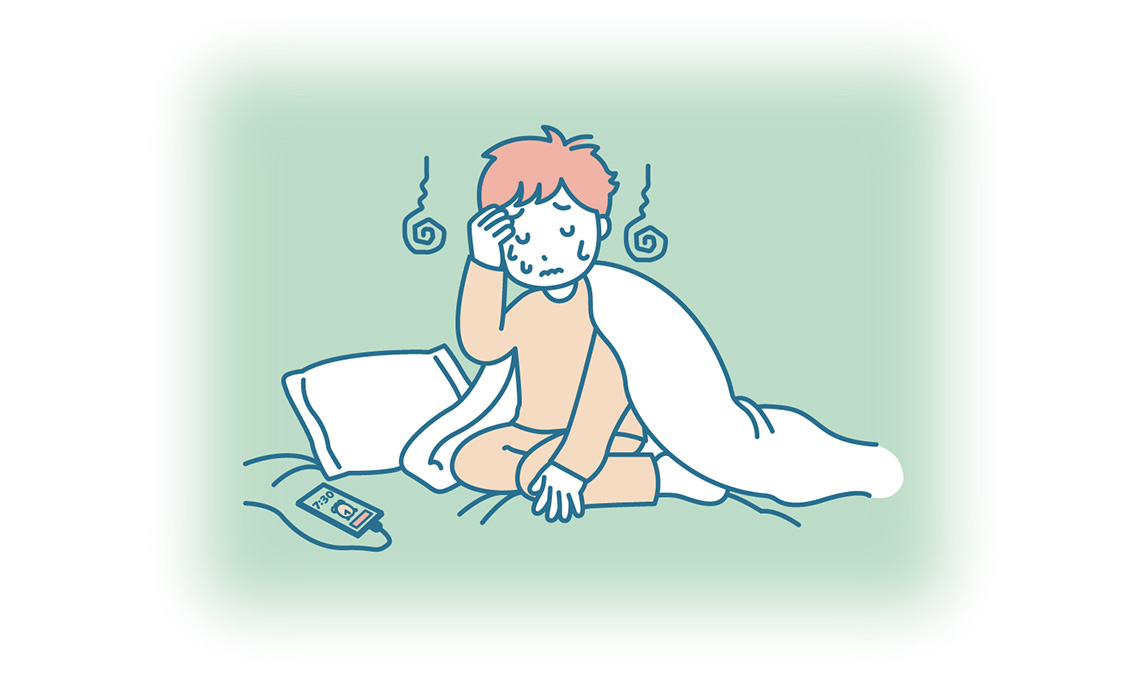
table of contents
I have a hard time getting up and can't go to school
One of the reasons that is often cited as causing students to skip school is a disruption in their daily routine.
He plays games late into the night and doesn't wake up in the morning. He seemed unwell in the morning so I let him stay home from school, but he started feeling better around noon and then plays games again late into the night...
It is not uncommon for children to be unable to escape this vicious cycle and, before they know it, they are no longer able to go to school.
From the parents' perspective, this may seem like laziness, and they may feel like raising their voice and telling their child to do it properly.
However,It may be that the child himself does not want to live the lifestyle he is currently living.
This time, we will introduce "orthostatic dysregulation," which is related to these rhythm disruptions and poor physical condition upon waking up.
If you would like to know more about sleep rhythms, please refer to the following column.
Sleep rhythm and school refusal: Family members should also acquire sleep literacy
What is orthostatic intolerance?
Orthostatic intolerance (OD) is a condition that causes symptoms such as dizziness, lightheadedness, fatigue, and fainting when getting up or when standing for a long period of time.
It is said that approximately 3 to 4 percent of school absentee students also suffer from OD.
There are various possible causes of OD, but one that is thought to have a particularly large impact is a malfunction of the autonomic nervous system, which is the body's automatic regulatory function.
For example, even when you are standing, blood is sent against gravity to your brain and other important organs thanks to the autonomic nervous system, which regulates blood pressure and other factors.
However, when OD develops, the autonomic nervous system becomes difficult to function, and not enough blood reaches the brain when you wake up, resulting in the situation where you "cannot wake up in the morning."
Symptoms caused by autonomic nervous system dysfunction do not only appear in the morning.
The autonomic nervous system is also closely related to the natural feeling of sleepiness that occurs at night.
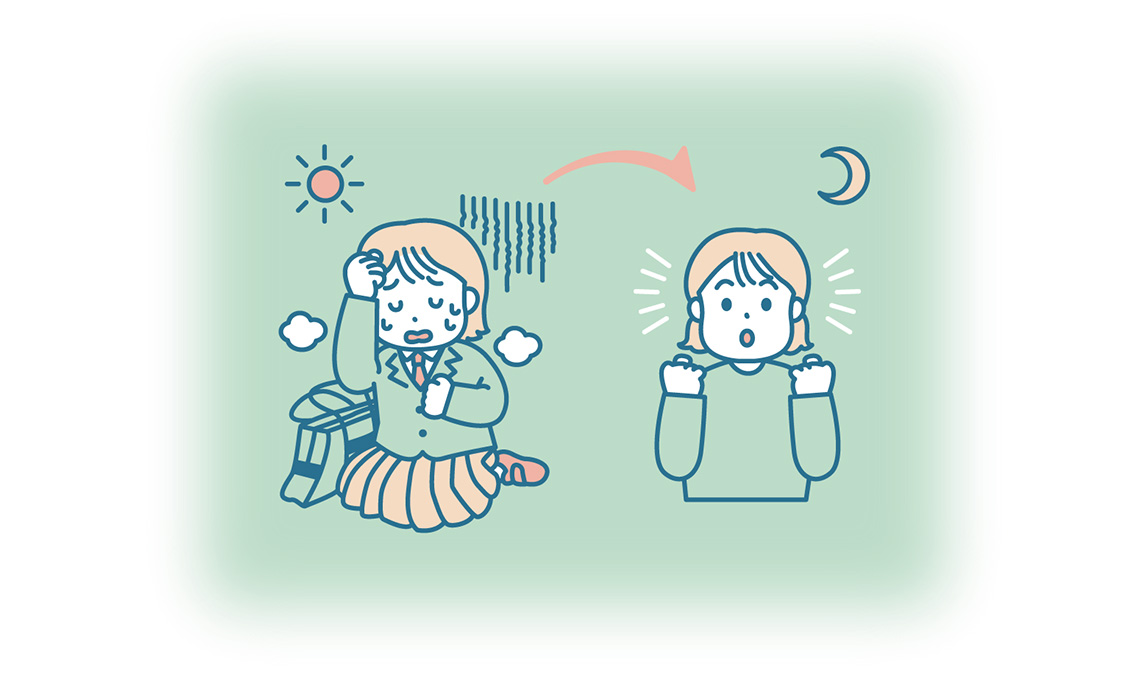
When OD occurs, the natural cycle of sleepiness is disrupted, and consciousness becomes awake at night. In other words, you may find yourself in a state where you "look tired in the morning, but seem energetic at night," leading to a lifestyle rhythm that can easily lead to the misunderstanding that you are "lazy."
Ages susceptible to onset
It is believed that OD involves a variety of factors, including not only the autonomic nervous system, but also physical changes and mental problems.
The earliest age at which OD can occur is around 10 years old. It tends to develop during adolescence, and the prevalence of OD among junior high school students is said to be around 10%, including mild cases.
This is thought to be due to the various changes that occur in the body during growth.
For example, as a child enters a growth spurt, their height and weight change dramatically, which in turn causes changes in the amount of blood required by each part of the body. These physical changes, along with a disruption in the balance of the autonomic nervous system and hormones, are thought to be factors in the onset of the condition.
Growth is also a time when various changes occur in the mind. As we grow into adults, we become more aware of things we hadn't noticed before, which tends to increase the mental burden (stress). This stress is also thought to disrupt the autonomic nervous system and is one of the factors that can lead to OD.
Diagnostic and therapeutic methods
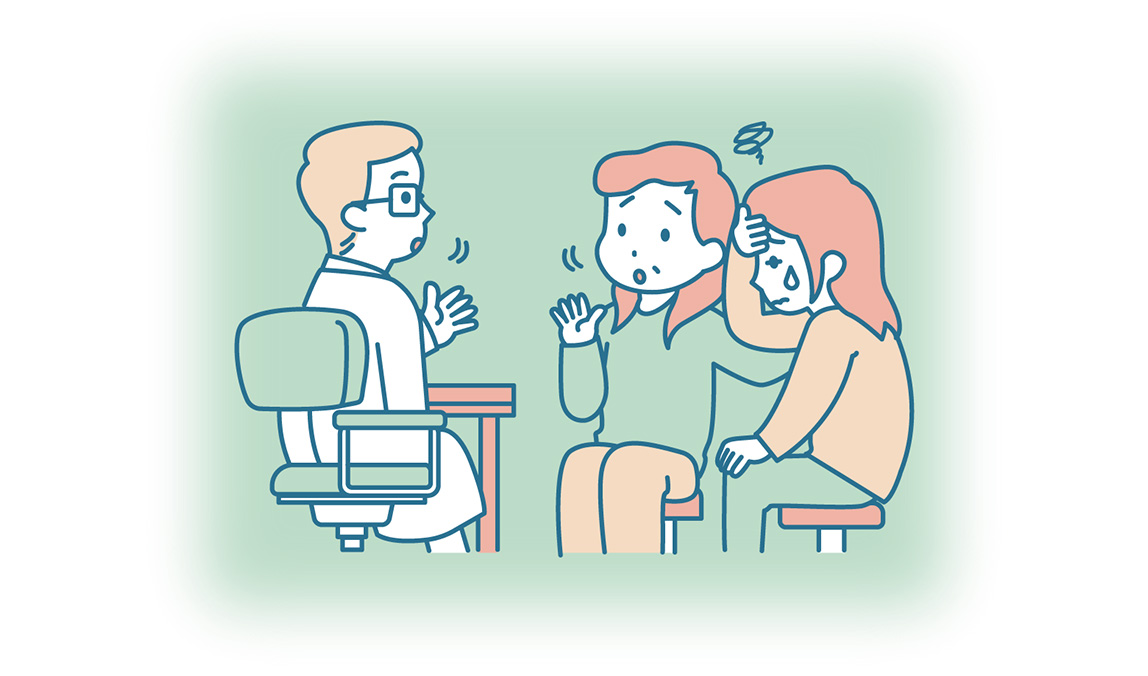
To be diagnosed with OD, you will need to be examined at a hospital.
Generally, you will need to see a pediatrician. (If your child is high school student or older, pediatricians may not accept them, so you should see a cardiologist or other specialist.)
The basic procedure for a medical examination is to first perform a simple screening test to determine whether or not the patient is suffering from OD, then to examine changes in blood pressure and heart rate in response to changes in posture, and then to make a more detailed classification.
Based on the results of the examination and classification, the doctor will provide guidance, which in most cases will mainly consist of lifestyle advice.
Based on the results of the examination, the doctor will give advice such as "What kind of environment should I create to make it easier to wake up in the morning?" and "What kind of lifestyle habits will improve the function of my autonomic nervous system?", as well as instruction on how to stand up and get up in a way that will make me less likely to feel sick.
If lifestyle advice does not result in much improvement, medication instructions may be given depending on the patient's condition.
If you search for OD on the Internet, you may come across something like a self-check sheet. These are only meant to help you become aware of the possibility, and do not necessarily guarantee an accurate diagnosis.
A careless self-diagnosis can lead to overlooking the possibility that the cause may be an illness other than overdose. In general, you should seek medical attention.
Desirable communication
As mentioned at the beginning, poor health caused by overdosing can sometimes appear as "laziness."
However, in some cases the condition is caused by stress, so scolding your dog too harshly may actually increase the stress.
Also, even if OD improves, it does not necessarily mean that the child will be able to attend school immediately.
When OD is the cause of school refusal, mental issues may be involved in "physical factors," or conversely, physical factors may influence "mental issues." There are many factors other than OD that affect each other in a complex way.It is.
Just solving one thing does not mean that a child will be able to go to school.
That's why it's important to recognize the child's inability to go to school as an SOS, and to first take a supportive stance and say, "Let's solve this together."
With appropriate medical help, we can gradually create a living environment where your child can live in peace.

The person who edited the article

After graduating from Hamamatsu University School of Medicine, he furthered his training at the National Center of Neurology and Psychiatry, and is currently the head of the pediatrics department at Hamamatsu Medical Center.
Keiko Murayama Pediatrician, Pediatric Neurologist
After graduating from Hamamatsu University School of Medicine, he worked in general pediatrics, neonatology, and a comprehensive medical rehabilitation center for physically and mentally disabled children before opening Genki Children's Clinic in 2007.
【references】
■Japan Society of Pediatric Psychosomatic Medicine. (2021). Orthostatic intolerance. Japan Society of Pediatric Psychosomatic Medicine: To the general public / Pediatric psychosomatic disorders - Representative diseases. Retrieved September 18, 2025.
https://www.jisinsin.jp/general/typical_diseases/起立性調節障害/