Columns
2026.1.28
Sleep rhythm and school refusal: Family members should also acquire sleep literacy
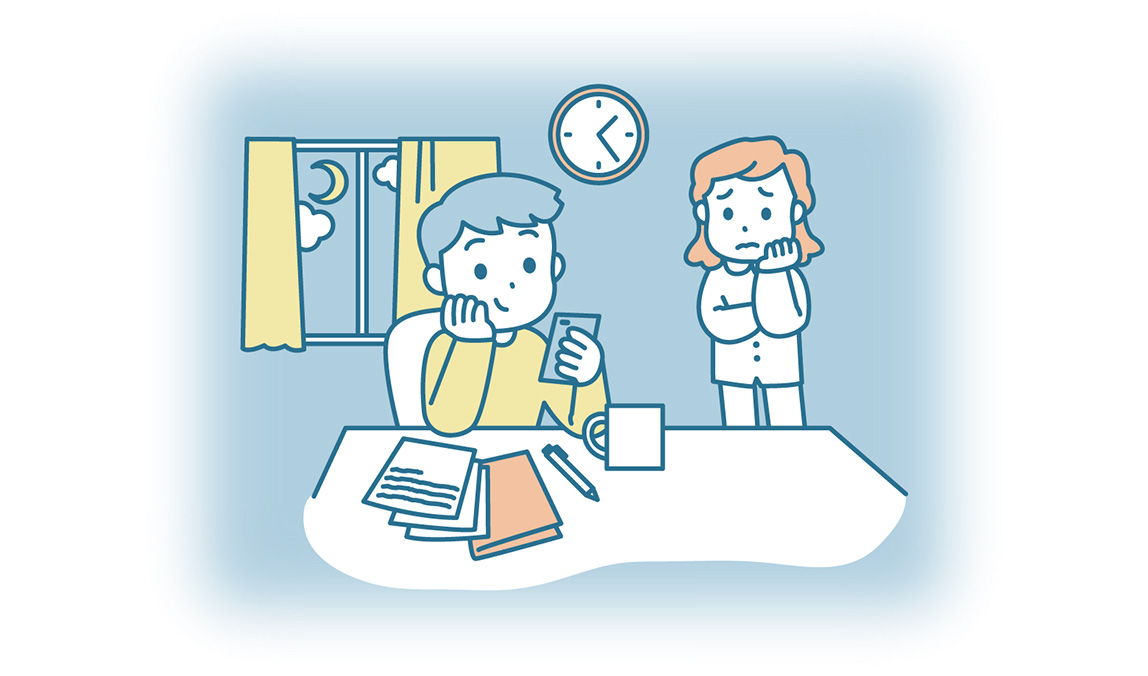
table of contents
Dealing with "late nights" as a family
There is a deep connection between school refusal and sleep.
A survey by the Ministry of Education, Culture, Sports, Science and Technology found that 26.2% of elementary school students who were not attending school had "consulted about irregular lifestyles."
In addition, a private survey of junior high school students who are not attending school found that the number one reason they do not want to go to school is "not being able to wake up in the morning."
They have trouble falling asleep at night, and no matter how much you try to wake them up in the morning, they won't wake up. Many parents are probably worried that if this continues, their child will have trouble not only going to school, but even living in society.
It is not easy to improve this condition of "going to bed late and waking up late" (technically known as "delayed sleep-wake phase disorder").
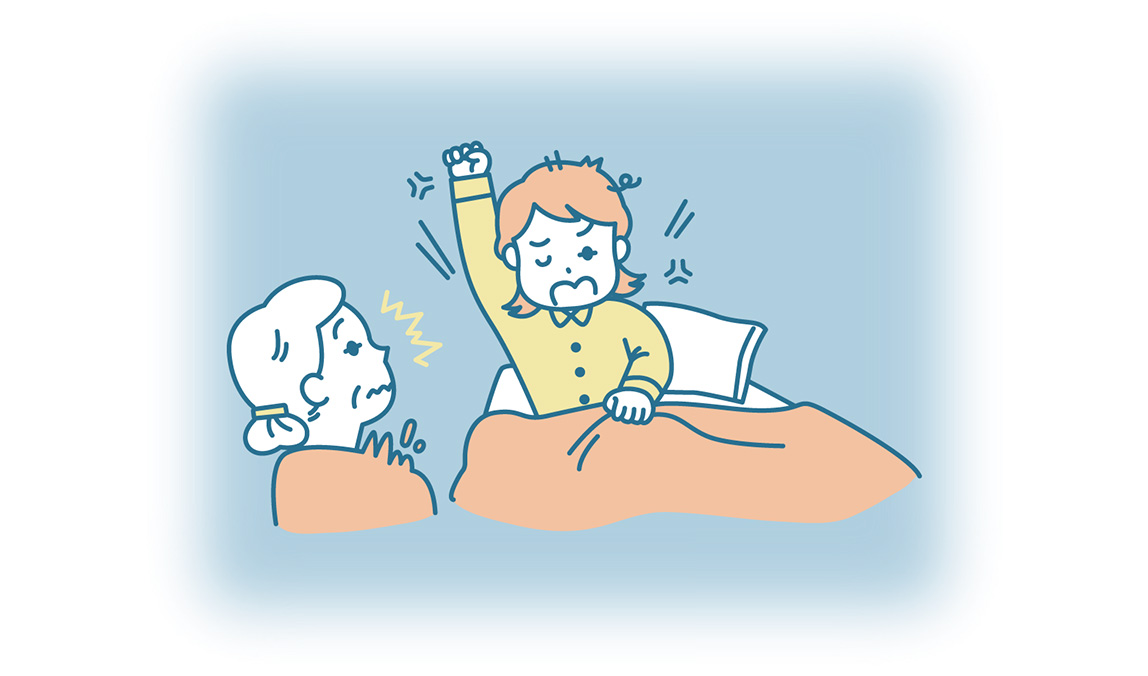
For example, you may try to wake up your child by calling out to them, but they may be half asleep and start verbally abusing you, or even hitting you (this is called "sleep drunkenness").
As a result, families give up on waking their children up, and end up in a vicious cycle of going to bed late and getting up late.
If you are unable to get up even when you are awake, it may be possible that you have a coexisting condition such as orthostatic intolerance, so please also refer to the column below.
What is "orthostatic intolerance"? -- Is your inability to wake up in the morning due to "laziness"?
Three reasons why your sleep rhythm is disrupted
First of all, why does this "late night, late rise" behavior occur? There are various factors, but here we will introduce three major points in particular.
The first possibility is that you are not getting enough sleep in the first place.
The recommended sleep times set by the American Sleep Society are 9-12 hours for children aged 6-12, and 8-10 hours for children aged 13-18. You may be thinking, "That's longer than you thought."
In fact, for Japanese elementary school students, the average weekday sleep time is 8.9 hours for boys and 8.8 hours for girls. For first-year junior high school students, it is 7.9 hours for boys and 7.5 hours for girls, and it has been found that the majority of children are not getting the recommended amount of sleep. In other words, it is possible that they are not waking up because they are not getting enough sleep in the first place.
Second, there is the possibility that "biological changes" may be influencing the results.
It has been shown that from the upper grades of elementary school onwards, when children enter puberty, their sleep times are delayed by up to two hours due to the influence of hormones and other factors.
In other words, even children who were able to wake up and be active in the morning without even thinking about it until around the middle of elementary school will find it harder to wake up in the morning, become more sleepy during the day, and have trouble falling asleep at night.
Third, there is the "social impact."
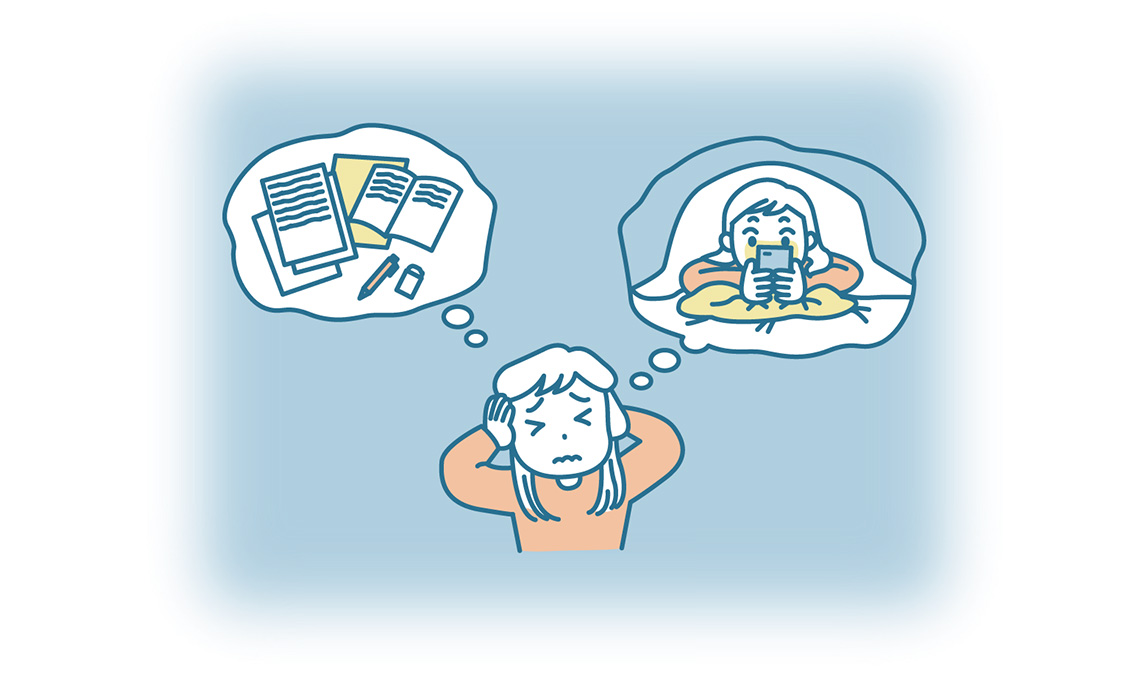
From around the upper grades of elementary school, in addition to the biological changes mentioned above, children tend to study and participate in extracurricular activities until late into the night, and with the spread of smartphones and other devices, it becomes easier for them to stay up late.
Additionally, this is the time when children begin to be required to get up early for reasons such as going to school or club activities, going against biological changes.
As a result, you may end up getting less sleep, your body clock may become out of sync with your daily life, and your sleep rhythm may become disrupted.
Sleep rhythm and school refusal
However, despite the above factors, not all children in the upper grades of elementary school will develop sleep problems so severe that they cannot attend school. Also, even if a child is currently absent from school and their sleep rhythm is disrupted, it does not necessarily mean that the reason for their absence is "sleep."
In fact, there are cases where students are refusing to go to school because they "can't wake up," and there are also cases where students have trouble sleeping because of not going to school. It's a "chicken and egg" situation.
For example, even if a child begins to go to bed late and wake up late, exposure to sunlight while going to school can help to curb this tendency to change in sleep rhythm.
However, when children start skipping school and have fewer opportunities to go out during the day, such as commuting to school, these factors disappear, and the tendency to go to bed late and get up late can become more prevalent.
So what can families do to improve these disrupted sleep rhythms?
What family members can do: 1. Don't force your child to wake up early
The first thing to do is understand how much sleep you need and avoid forcing yourself to wake up too early. In other words, make sure you wake up after getting enough sleep.
For example, if your child finally falls asleep around 3 a.m. and you try to wake them up at 6 a.m. because you have to take them to school, if they haven't had enough sleep, it will be difficult for them to wake up.
In fact, trying to wake them up in that situation is likely to result in sleep intoxication, which will only leave the family exhausted.
In the future, you will need to move your child's bedtime earlier, but first make sure to wake them up at a time when they can wake up.
What families can do ② Develop lifestyle habits
The next thing to do is to create a lifestyle.
It's often difficult to suddenly get into the habit of going to bed early and waking up early. If your bedtimes and wake-up times are irregular, try to aim to go to bed and wake up at roughly the same time every day, even if it's a little later.
To do this, it is important to create a "lifestyle habit."
For example, why not try taking a bath at a fixed time? We recommend taking a bath about an hour before you want to sleep. Changes in body temperature are closely related to sleepiness, so you will naturally feel sleepy when you want to sleep.
Also, when it's time to go to bed, create a quiet, dark environment that promotes sleep.
Furthermore, to prevent yourself from falling back asleep, it is recommended that you make it a habit to get some sunlight immediately after waking up. Exposure to sunlight and bright light in the morning has the effect of promoting natural sleep at night.
However, there is one thing to be careful of: if your child goes to bed late and wakes up late, you should avoid exposing them to light between 6 and 7am.
A child who goes to sleep at 3am and is exposed to sunlight at 6am is like a child who goes to sleep at 10pm and is exposed to light at 1am.
In other words, it has the same effect as being exposed to light in the middle of the night, and can actually disrupt your sleep rhythm.
So, first of all,Make it a habit to get sunlight at a time that is comfortable for you to wake up at.
What families can do 3. Get medical help
The last option is to seek medical help, which is usually a sleep clinic.
A sleep clinic is a place where they focus on helping you with things like how to organize your sleep, such as what time you want to wake up. If you follow the doctor's instructions carefully, some children can see improvement in as little as six months.
Some hospitals have sleep clinics for children. If you're not sure whether there is one near you, you might want to first consult your pediatrician.
It's important to note that improving sleep doesn't necessarily mean your child will be able to attend school. There are many factors that contribute to school refusal, and sleep isn't the only problem in many cases.
However, sleep problems (such as sleepiness and fatigue) are often perceived as an issue by the child themselves, and are easier to address than other factors that cause school refusal. Why not use medical treatment as an opportunity to improve the situation?
Taking a "sleep" perspective may be a clue to resolving the person's "distress." Consider seeking professional help as an option.

NOTES
Developing lifestyle habits for young children
Young children are not yet affected by the physical changes that come with puberty, so many of them are naturally morning people. If your child's sleep rhythm is disrupted, it's a good idea to first reassess whether they have a quiet, dark environment at night that encourages sleep, and whether they are getting enough sleep.

The person who edited the article

Pediatrician
He is involved in treating children who refuse to go to school and specializes in neurodevelopmental disorders and pediatric sleep.
【references】
Ministry of Education, Culture, Sports, Science and Technology: Summary of the survey results on student guidance issues such as problem behaviors and school absenteeism among children and students in 6
https://www.mext.go.jp/content/20260116-mxt_jidou02-100002753_2_2.pdf
■The Nippon Foundation (2018): Report on a survey of children who tend to skip school
https://www.nippon-foundation.or.jp/who/news/information/2018/20181212-6917.html
■Sakamoto N, Kabaya K, Nakayama M: Sleepproblems, sleep duration, and use of digital devices among primary school students in Japan. BMC Public Health. 22(1): 1006, 2022
■Ojio Y, Nishida A, Shimodera S, et al: Sleepduration associated with the lowest risk of depression/anxiety in adolescents. Sleep. 39(8):1555–1562, 2016.