Columns
2026.3.30
Games, smartphones, and school absenteeism
The feelings of children behind digital behavior
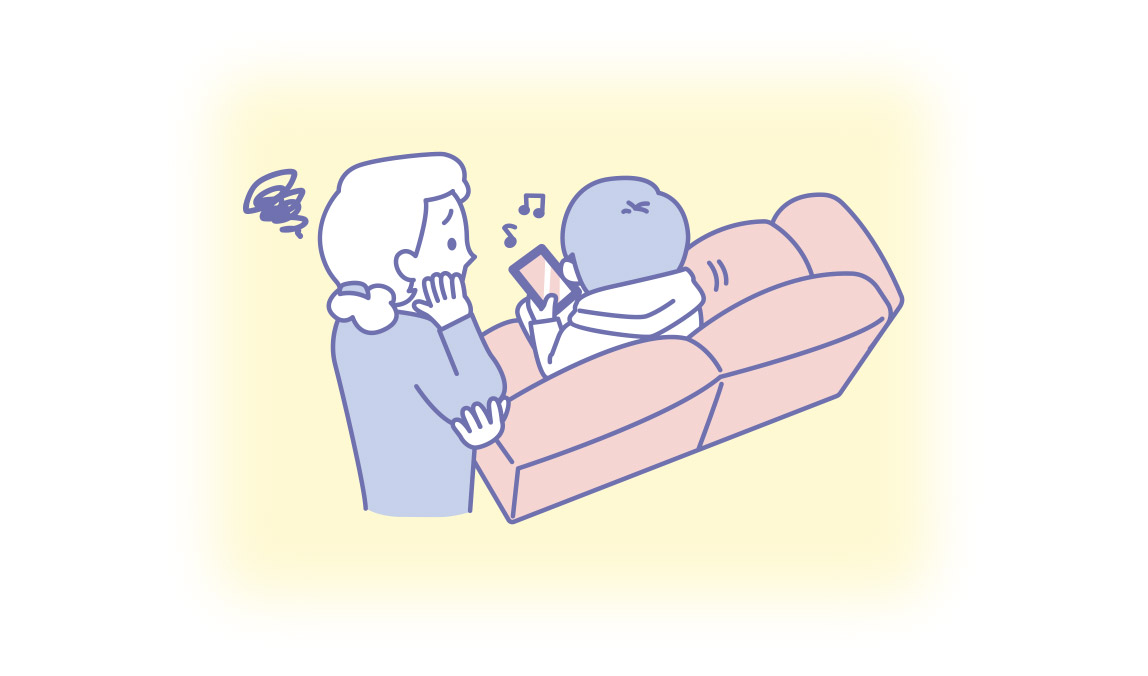
table of contents
According to Professor Wakuda, who supervised this article and is an expert in supporting children who refuse to go to school, he often receives inquiries such as, "My child is always playing games or using their smartphone," or "They stay up late using their smartphone and can't get up in the morning."
In fact, many parents are probably worried that "games and smartphones might be the cause of their child's school absenteeism."
However, from a developmental and psychological perspective, games and smartphones are often not so much the "cause" as they are the "result" that reflects the child's state of mind.
Why do children turn to games and smartphones?
There are several reasons why children are so strongly drawn to games and smartphones.
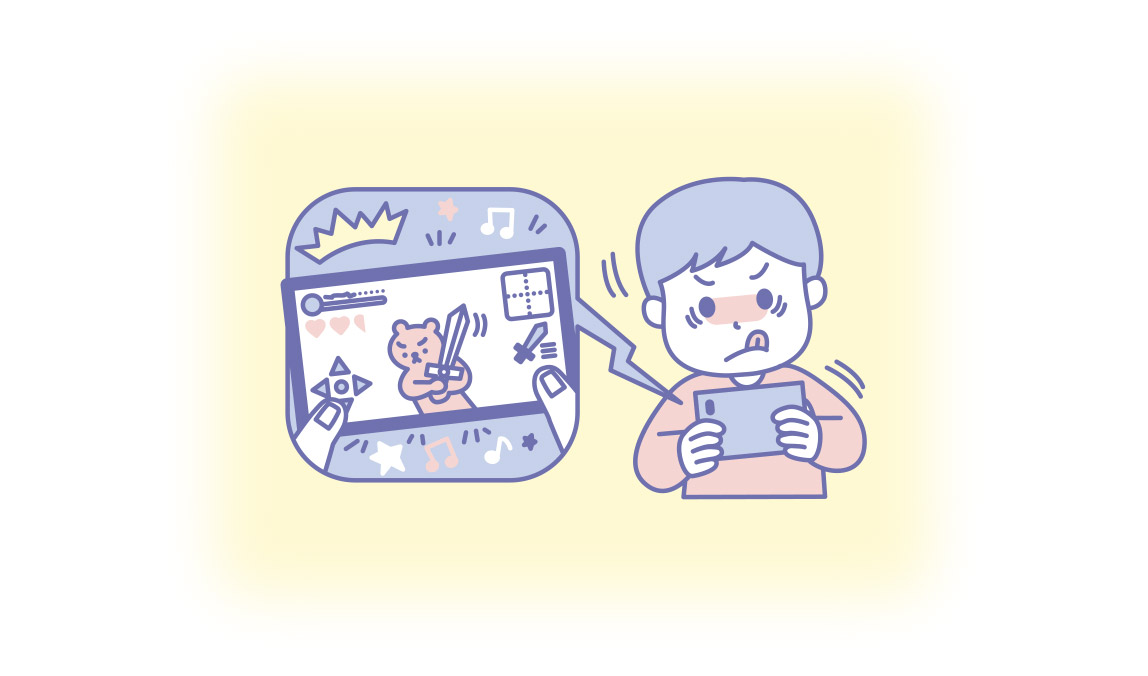
One reason is that it provides a safe space. When children experience prolonged stress or fatigue in school life, they unconsciously seek places where they won't be judged or where they won't fail. The world of games and videos, for example, allows them to spend time at their own pace, making it a space where they can easily relax.
Furthermore, games offer a sense of accomplishment. When your efforts in a game lead to results, you get the feeling of "I did it" or "I made progress."
In other words, Games and smartphones often serve as a source of emotional support for children.
Do games and smartphones really disrupt sleep?
It's often said that "games and smartphones are bad for sleep." Certainly, the light emitted from game consoles and smartphone screens can affect the body's internal clock. However, recently, the idea that light itself isn't the only thing disrupting sleep is gaining traction.
Actually, what has a bigger impact is how you use your game console or smartphone before going to bed.
The state of your brain is vastly different when you're passively watching a video compared to when you're playing a game, chatting, thinking, or interacting with others. In the latter case, your brain remains highly active, making it difficult to relax and fall asleep.
In other words, It's not so much "looking at game consoles or smartphones," but rather the prolonged state of the brain not being able to rest that affects sleep.It is considered.
Disruptions to your daily routine can also be a consequence of other factors.
Children who refuse to go to school often have disrupted sleep patterns. However, it cannot be said that disrupted sleep patterns are the sole "cause" of school refusal.
The stress and fatigue from school, and the constant pushing yourself too hard, can sometimes lead to problems like difficulty sleeping at night or being unable to wake up in the morning. Orthostatic dysregulation and autonomic nervous system dysfunction can also occur within this context.
Therefore, simply trying to get them to stop using their smartphones or get them to bed early is often ineffective.
What's important is not to take it away, but to understand it.
Suddenly restricting children's access to games or smartphones can cause them to lose a sense of security, leading to increased anxiety and rebellion.What's important is not trying to "make them stop," but rather trying to understand why they rely on it..
Here are some small things you can do at home:
① Gradually increase the amount of conversation and interaction during the day that allows you to feel safe and secure.
How you use your smartphone or play games at night is actually connected to how you spend your time during the day.
When you have more moments of security and comfort during the day, you may feel less need to seek intense stimulation at night.
For example,
- Parents should ask questions like, "When do you feel a little more relaxed when you play games?" or "What do you like about the games you're playing now?"
- "What game did you play today?" "What do you find interesting about that game?" These are questions that focus on the experience rather than the result, without judgment.
- Create time to connect with children's interests and feelings through discussions about games.
This kind of interaction conveys to children the message that you are trying to understand them.Simply showing a willingness to understand rather than rushing to provide an answer can make a child feel secure.
② Before going to bed, try using it in a less stimulating way.
If you continue playing games or chatting right before going to bed, your brain will remain in an excited state, making it difficult to fall asleep.
Therefore, instead of "completely stopping," a helpful approach might be to "switch the way you use it."
For example,
- Play competitive or action-packed games during the day, rather than before bed, and switch to more relaxed games like creative or exploration-based games at night.
- Games and chatting should be stopped 2-3 hours before bedtime.
- Before going to bed, switch to "passive" uses such as watching videos or listening to music that don't require any interaction.
- Place your game console or smartphone a little distance away from the bed, rather than right next to it.
These are some of the methods.
Instead of saying "Stop it," try saying "Let's take some time to rest now," which can make it easier for them to accept.
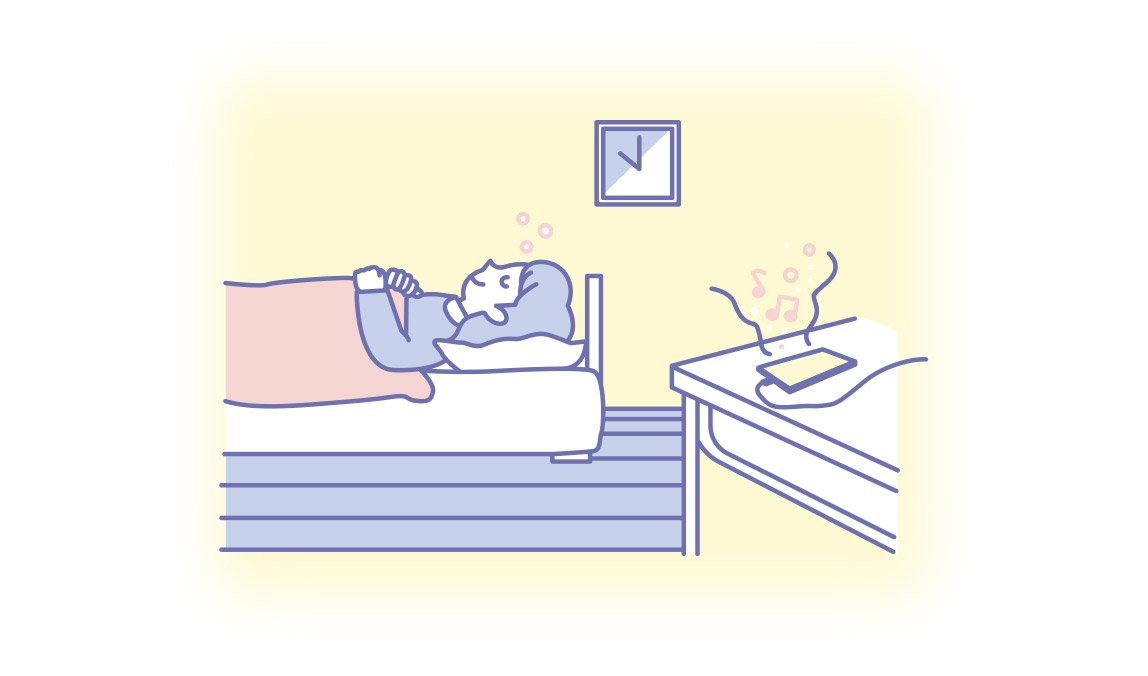
③ Use features like Do Not Disturb mode as a way to adjust the environment.
Instead of focusing on the smartphone itself as the problem, one approach is to use the settings function to improve the environment.
For example,
- Parents and children should check together what settings are on their smartphones.
- Set your device to automatically activate sleep mode and blue light filter 2-3 hours before you go to bed.
- Turn off notification sounds and vibrations to reduce situations where you "have to react."
It's important to view these adjustments not as "taking away smartphones," but as support for protecting sleep.
Games and smartphones can be clues to understanding children.
Games and smartphones are by no means the "enemy."
Understanding how children use games and smartphones, and how they feel about them, can sometimes reveal what they are tired of and what they truly desire.
Sleep, daily rhythms, and mental state are all interconnected.
It's important to take a holistic view, rather than focusing solely on games or smartphones.

NOTES
Please also refer to the following columns regarding sleep, daily routines, and children's mental state.
Sleep rhythm and school refusal: Family members should also acquire sleep literacy
What is orthostatic intolerance?
Why not pay attention to your child's "pain"?

The person who edited the article

Director/Chief Researcher
After working as a teacher at a special needs school for over 20 years, she obtained a doctorate in child development, specializing in issues such as child bullying and school refusal.
【references】
■Literature name
Cain, N., & Gradisar, M. (2010). Electronic media use and sleep in school-aged children and adolescents: A review. Sleep Medicine Reviews, 14(4), 269–282.
Carter, B., Rees, P., Hale, L., Bhattacharjee, D., & Paradkar, MS (2016). Association between portable screen-based media device access or use and sleep outcomes: A systematic review and meta-analysis. JAMA Pediatrics, 170(12), 1202–1208.